
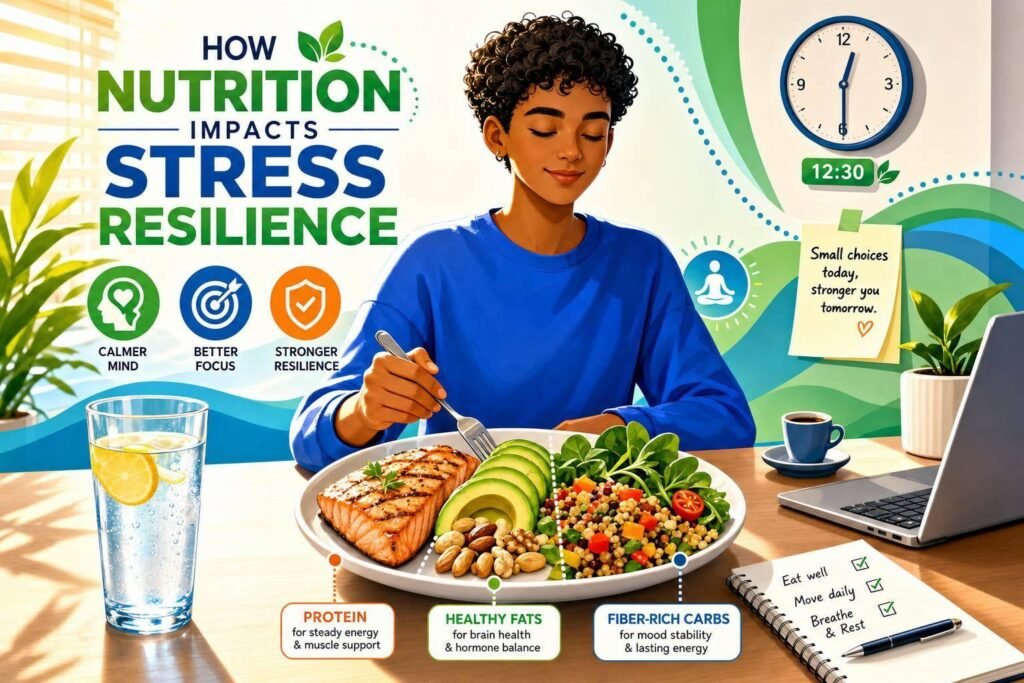
What you eat can make stress feel harder or easier to handle. Skipped meals, too much caffeine, low water intake, and ultra-processed snacks can push cortisol up, trigger blood sugar crashes, and make focus, mood, and sleep worse.
Here’s the short version:
- Your brain uses about 20%–25% of your daily calories, so it needs a steady fuel supply.
- Caffeine can push cortisol up by 30%–50% in people who are already stressed.
- Mild dehydration can hurt focus and bump cortisol higher.
- Magnesium, omega-3s, B vitamins, protein, fiber, and fermented foods help support mood, recovery, and steadier energy.
- A simple fix is to eat every 3–5 hours and build meals around protein + fat + fiber.
- For busy workdays, the goal is not a perfect diet. It’s fewer crashes, steadier focus, and less wear on your system.
If I had to sum up the whole article in one line, it would be this: stress resilience is partly a food problem. Steadier meals, better snacks, enough water, and less caffeine late in the day can help you stay calmer, think more clearly, and recover with less drag.
| Habit | What it often does | Better move |
|---|---|---|
| Skipping meals | Blood sugar dips, irritability, low focus | Eat every 3–5 hours |
| Eating refined carbs alone | Fast spike, then crash | Pair carbs with protein or fat |
| Too much caffeine | Higher cortisol, jitters, worse sleep | Keep it to 1–2 cups, stop by 2:00 PM |
| Low water intake | More fatigue, weaker focus | Aim for 2–3 liters a day |
| Convenience-heavy diet | Fewer key nutrients for recovery | Add whole foods, fiber, omega-3s, magnesium |
That’s the core idea: small food choices can lower the day-to-day load that stress puts on your brain and body.
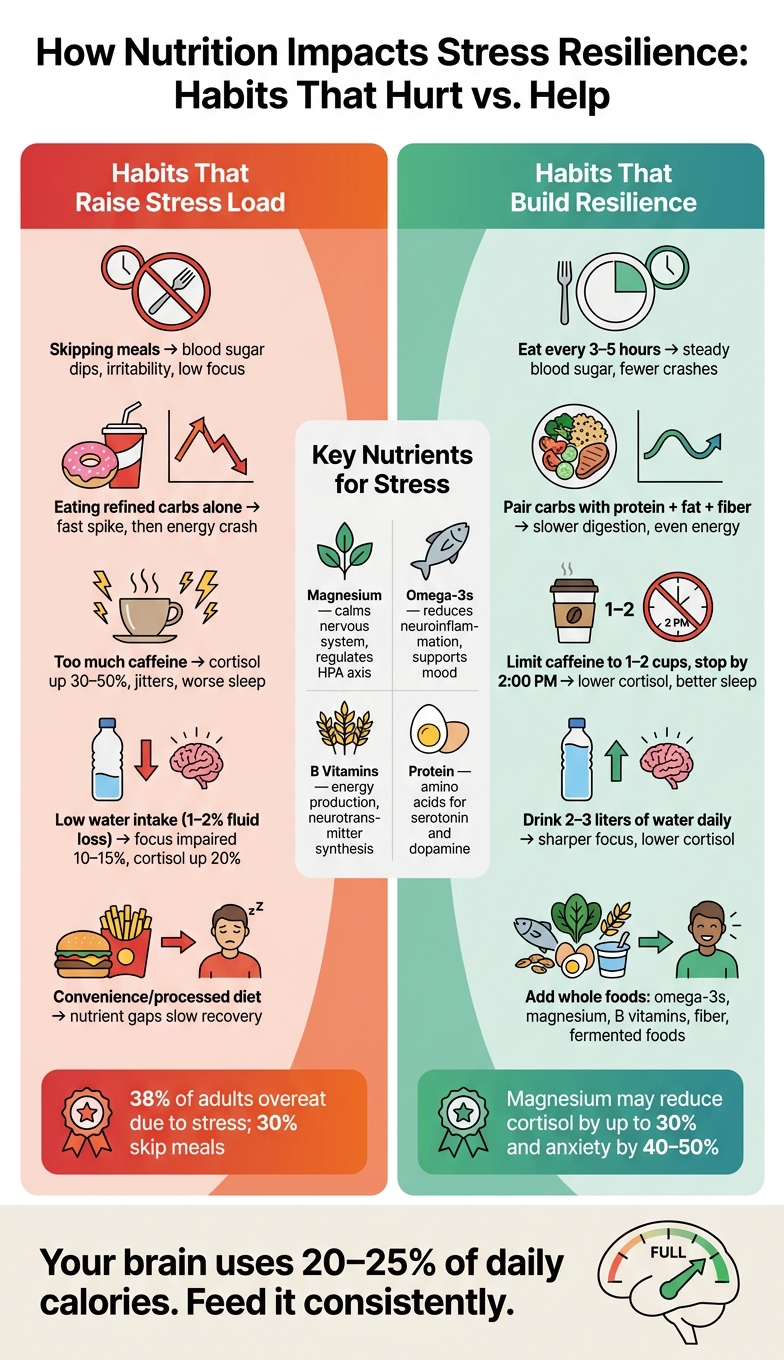
Nutrition Habits That Hurt vs. Help Stress Resilience
5 Foods That Naturally Decrease Cortisol, the Stress Hormone
sbb-itb-7c1dd7e
The Problem: Eating Habits That Lower Stress Tolerance
Poor nutrition is bigger than junk food. It leaves your brain and body with less to work with when pressure hits. According to the American Psychological Association, 38% of adults say they overeat or eat unhealthy foods because of stress, while 30% skip meals for the same reason. That shrinks your buffer when deadlines, meetings, and late nights start piling up.
The hard part is that these habits often look normal during a busy workday. You push lunch back, grab whatever is close, and keep going. But little by little, that makes it harder to deal with pressure when work gets intense.
Blood Sugar Swings from Skipped Meals and Refined Carbs
On a packed meeting day, it’s easy to grab something fast – a bag of chips, a granola bar, or takeout. The problem is what comes next. Blood sugar jumps, then drops about an hour later, and that drop can set off a stress response.
That crash can show up as irritability, shakiness, and feeling way more on edge than the situation calls for. Skipping breakfast can make it worse by intensifying the morning cortisol rise, which can make the whole day feel heavier from the start. Then the loop kicks in: stress drives cravings for fast glucose, the snack gives a short dopamine lift, and the crash leaves you more reactive and tired than before.
And blood sugar swings aren’t the whole story. Nutrient gaps can also make recovery harder.
Low Intake of Nutrients That Support Mood and Recovery
Chronic stress drains nutrients your brain needs to recover. During busy workweeks, those gaps often show up in pretty familiar ways:
| Nutrient | Role in Stress Resilience | Signs of a Gap |
|---|---|---|
| Magnesium | Regulates the HPA axis and calms the nervous system | Anxiety, muscle cramps, insomnia |
| Omega-3s | Reduces neuroinflammation and supports mood | Mood swings, low focus, fatigue |
| B Vitamins | Energy production and neurotransmitter synthesis | Brain fog, poor focus, burnout |
| Protein | Provides amino acids for serotonin and dopamine | Sugar cravings, low motivation, slow recovery |
These shortfalls are common when workdays lean heavily on convenience foods.
How Work Habits Push Convenience Over Better Eating
A lot of the time, work habits shape eating habits more than stress itself. Back-to-back meetings, tight deadlines, and nonstop notifications leave no clear break for a real meal. So delivery apps, vending machine snacks, and eating at your desk become the easy default.
"Burnout is not just about working too hard – it’s about the body and brain running out of resources. If you eat a diet high in processed foods, your brain is not getting the support it needs to recover from stress." – Michael Genovese, MD, Neurologist
That’s why food advice has to match how startup teams and busy professionals actually work. The goal isn’t perfect eating. It’s steadier energy through the day, with fewer crashes and more room to handle pressure.
The Solution: Nutrition Strategies That Build Stress Resilience
The goal here is steady energy: fewer blood sugar swings, less inflammation, and meals that work during a packed day. For founders, developers, and small teams, the best plan is the one you can repeat. Not perfect. Just doable.
Start with meals that help you avoid the mid-afternoon crash. Then layer in foods that help dial down inflammation.
Build Meals That Keep Energy Steady for 3 to 5 Hours
A simple way to do this is the protein-fat-fiber formula. Each meal or snack should include protein, healthy fats, and fiber. That combo slows digestion and helps keep energy more even.
In plain terms: don’t eat carbs by themselves. Pair them with protein or fat to soften the insulin response. A banana on its own can lead to a fast blood sugar spike, then a drop. That same banana with almond butter gives you steadier energy for a few hours.
Easy meals that fit this pattern include scrambled eggs with avocado and spinach on whole-grain toast, or Greek yogurt with berries and walnuts.
Eating every 3 to 5 hours also helps prevent long gaps that can leave you drained.
Use Anti-Inflammatory Foods to Lower Background Stress on the Brain
A Mediterranean-style pattern built around vegetables, fruit, beans, whole grains, olive oil, nuts, seeds, and fatty fish can help lower inflammation. Nutrient-dense, anti-inflammatory diets are linked to lower fatigue and exhaustion.
Omega-3s from salmon, sardines, walnuts, and chia seeds may help lower cortisol. Magnesium-rich foods like spinach, pumpkin seeds, and almonds also support the stress response. Some evidence suggests magnesium can reduce cortisol by up to 30% and improve anxiety symptoms by 40 to 50%.
It also helps to cut back on sugary drinks, fried foods, and heavily processed snacks. Those foods can add more inflammatory stress to the brain.
Next up: the gut. It plays a big part in how the brain responds to stress.
Support the Gut-Brain Axis with Fiber and Fermented Foods
Your gut and brain are in constant contact through the gut-brain axis. Fiber feeds gut bacteria that help calm inflammation. Good sources include oats, beans, lentils, onions, garlic, asparagus, and most fruits and vegetables.
Fermented foods like yogurt, kefir, kimchi, tempeh, and miso help support a healthier gut microbiome.
You don’t need to overhaul your diet to get started. A daily serving of kefir or a spoonful of kimchi with a regular meal is enough to begin. Chia seeds mixed into Greek yogurt, or hummus with pre-cut vegetables in the afternoon, is another easy move. Small habits add up fast when they’re easy enough to stick with.
Use this table as a fast workweek reference.
| Strategy | Easy Food Examples | What It Does |
|---|---|---|
| Prebiotic Fiber | Oats, beans, onions, garlic, asparagus | Feeds gut bacteria; produces anti-inflammatory SCFAs |
| Probiotic Support | Yogurt, kefir, kimchi, tempeh, miso | Boosts microbiome diversity; supports serotonin production |
| Omega-3s | Salmon, sardines, walnuts, chia seeds | Reduces neuroinflammation; lowers cortisol |
| Magnesium | Spinach, pumpkin seeds, almonds, black beans | Calms the nervous system; regulates stress hormones |
How to Apply This During Busy Workweeks
Use the nutrition ideas above as default moves for packed workdays. Knowing what to eat is the easy part. Doing it when you’re in sprint mode or stuck in back-to-back meetings is where things usually fall apart.
The fix is simple: make the better choice the easy choice. That means fewer energy dips, steadier focus, and less strain on a nervous system that’s already working hard.
Simple Meal Templates for Founders, Developers, and Small Teams
A little prep goes a long way here. Cook a few basics on the weekend – roasted chicken or lentils for protein, quinoa or brown rice, and roasted vegetables – then mix and match during the week instead of reaching for whatever’s nearby.
Breakfast can stay simple. Scrambled eggs with avocado and whole-grain toast or overnight oats with chia seeds are fast, easy to repeat, and more likely to keep your energy steady.
Lunch doesn’t need to be fancy either. Grilled chicken or salmon over mixed greens with quinoa and olive oil dressing works well. For dinner, a quick stir-fry with chicken, broccoli, brown rice, and sesame seeds can save you from yet another delivery order.
These meal templates help cut decision fatigue and keep your energy more even through long work blocks.
When meals get pushed back, snacks and water can help keep things on track.
Better Snacks, Hydration, and Caffeine Limits
For snacks, stick with the same protein-fat-fiber rule. Good options include:
- Apple slices with peanut butter
- Hummus with baby carrots
- A handful of walnuts or almonds
- Greek yogurt with berries and chia seeds
- 1 oz of dark chocolate (70%+ cocoa)
Hydration is easy to miss on a busy day, but even mild dehydration – just 1–2% fluid loss – can impair cognitive performance by 10–15% and increase cortisol by up to 20%. Start with 17 oz (500 mL) when you wake up, keep a 20 oz or 1-liter bottle at your desk, and aim for 2–3 liters per day.
With caffeine, keep it to 1–2 cups, wait 60–90 minutes after waking, and stop by 2:00 PM.
A Quick-Reference Table for Common Workday Nutrition Problems and Fixes
Use this table when your calendar starts dictating your meals.
| Work Scenario | Common Pitfall | Stress Effect | Better Food Option |
|---|---|---|---|
| Back-to-back meetings | Skipping lunch or grabbing sweets | Crash, irritability, hunger | Apple with almond butter or Greek yogurt with nuts |
| Late-night coding session | High-caffeine energy drinks or sugary snacks | Jittery focus, worse sleep | Herbal tea (chamomile or mint) and 1 oz dark chocolate |
| Early morning pitch | Skipped breakfast or just coffee | Jitters and anxiety | Scrambled eggs with avocado or overnight oats with chia seeds |
| Travel or commute days | Fast food or processed airport snacks | Brain fog and low motivation | Pre-packed trail mix (walnuts, seeds) and a 20 oz bottle of water |
Conclusion: Small Nutrition Changes Can Make Stress Easier to Handle
Nutrition can push your baseline stress load up or bring it down. That’s why it’s a practical lever, not just a nice extra.
As psychiatrist Zishan Khan, MD, notes, food can either buffer stress or intensify exhaustion. Nutrient-dense meals help replace nutrients stress depletes. Anti-inflammatory foods can lower neuroinflammation, while fiber and fermented foods support gut health, which affects mood. When those pieces are in place, handling pressure tends to feel less draining, and recovery comes a bit easier.
Key Steps to Put Into Practice This Week
For busy founders and developers, the aim is consistency, not perfection.
- Eat every 3–4 hours so you don’t go too long without food.
- Include protein, healthy fat, and fiber at each meal and snack to help keep energy even.
- Swap ultra-processed snacks for options like walnuts, Greek yogurt, or an apple with almond butter.
- Drink water before you feel thirsty during the day.
- Limit caffeine to 1–2 cups and stop by 2:00 PM.
You don’t need a major overhaul. Start with one or two changes this week, then add another once those feel normal. Even one or two small shifts can start to lower the day-to-day drag that stress puts on your system.
FAQs
What should I eat first to reduce stress?
Start with a protein-rich breakfast to help steady blood sugar and keep your energy more even through the day.
Try not to eat carbohydrates on their own. Pair them with protein, healthy fats, and fiber. Lean toward whole, minimally processed foods like leafy greens, fatty fish, nuts, seeds, and berries. Eating this way on a regular basis can help your body handle stress better.
Can caffeine make stress and anxiety worse?
Yes. Too much caffeine can make stress and anxiety feel worse.
It might give you a short burst of energy, but it can also increase cortisol, the body’s main stress hormone. And that can leave you feeling more on edge than focused.
A high intake may:
- Increase irritability
- Disrupt sleep
- Make your body feel more reactive
- Leave you feeling drained later
Not everyone reacts the same way, which is why moderation matters. For some people, it helps to keep caffeine to the morning or switch to lower-caffeine options like green tea.
How long does it take to notice a difference?
There’s no exact timeline here. The point isn’t that food works like an instant mood switch. Instead, nutrition is described as a foundation for mental well-being that helps support stress resilience over time.
Put simply, dietary changes are framed as a steady daily habit. Day by day, that habit helps build your internal reserves.