
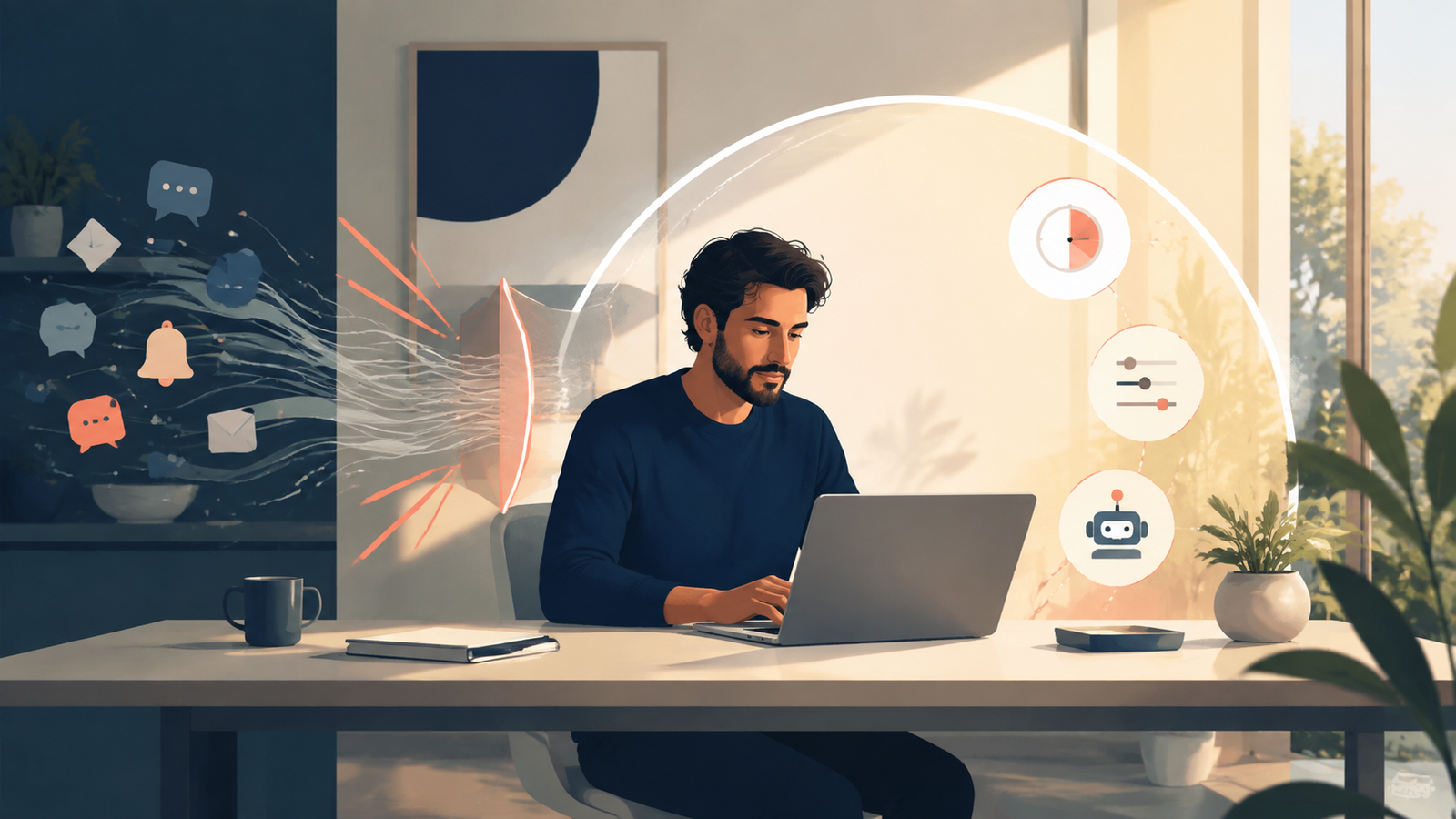
Feeling overwhelmed by digital distractions? Entrepreneurs in 2026 face constant interruptions from notifications, endless emails, and decision fatigue. The result? Less focus and more stress. But here’s the good news: technology now offers smarter ways to work.
AI tools, automation, and focus-driven strategies can help you regain control of your time and energy. Here’s how:
- Deep Work & Time-Blocking: Use AI-powered schedulers to prioritize tasks and group similar activities for uninterrupted focus.
- Digital Minimalism: Simplify tools, set boundaries, and declutter your workspace to cut distractions.
- AI & Automation: Automate repetitive tasks like email sorting and meeting scheduling to free up mental space.
- Wellness & Balance: Leverage meditation apps, sleep trackers, and stress monitors to maintain productivity without burnout.
A Simple 2026 Focus System
- Choose one weekly outcome. Use this weekly goal-prioritization method before filling the calendar.
- Protect two focus blocks. Put demanding work in the hours when your energy is strongest and use flexible scheduling tools to defend those blocks.
- Automate one recurring task. Start with scheduling, routine reporting, inbox triage, or task handoffs; keep a human review step for consequential decisions.
- Review friction every Friday. Remove one unnecessary notification, meeting, or tool. If priorities keep drifting, compare these goal-setting systems for entrepreneurs.
Want better focus? Combine these tools with habits like movement breaks, scheduled downtime, and weekly reviews to stay sharp and balanced.
Brand New Productivity Apps You’ve Never Heard of (2026)
Tech-Based Focus Methods for Entrepreneurs
Staying focused in 2026 means blending proven productivity techniques with cutting-edge technology. These strategies help simplify your schedule and keep your attention sharp. Let’s dive into how you can weave these digital tools into your daily routine.
Deep Work and Time-Blocking: Building a Framework for Focus
Deep work – where you dedicate uninterrupted time to mentally demanding tasks – is essential for big-picture planning. Pair this with time-blocking, a method made even more effective by modern scheduling tools that analyze your energy levels and meeting trends. By grouping similar tasks together, you can avoid the mental drag that comes from constantly switching gears. Start small, then gradually increase your focus intervals to strengthen your ability to dive deep into complex work.
Digital Minimalism: Decluttering Your Workspace for Better Focus
Once you’ve structured your time, digital minimalism helps refine your environment. For entrepreneurs in tech, this means simplifying your digital tools – eliminating unnecessary apps and setting specific times to check messages. Clear boundaries between work and personal tech use can drastically reduce interruptions. On top of that, creating a distraction-free physical workspace signals your brain that it’s time to buckle down and focus.
AI and Automation: Supercharging Productivity in 2026
Artificial intelligence is now a game-changer for getting more done. AI tools can handle repetitive tasks, like categorizing messages, drafting response templates, and flagging high-priority items. Machine learning takes calendar management to the next level, identifying the best times for meetings based on your work habits. Automation doesn’t stop there – it streamlines data analysis, making it easier to generate reports and spot trends, while workflow tools can automatically trigger the next steps in a project once a task is completed. These advancements give you more time to focus on what truly matters.
AI-Powered Tools to Improve Focus
AI tools are changing the way we handle routine tasks and manage communication. They help streamline workflows, allowing you to shift your attention to more critical, strategic activities. Let’s take a closer look at how specific AI tools can simplify communication and make content creation easier.
AI-Powered Writing and Communication Helpers
For entrepreneurs managing multiple projects, Claude is a game-changer. This platform helps craft and refine a variety of content, from website copy to technical documentation – even code. Its standout feature, "Unlimited Projects to organize chats", ensures that conversations stay neatly arranged by team or initiative, making it easier to keep track of everything.
Claude also takes on time-consuming tasks like deep research and analysis, lightening your workload and giving you more mental space to focus on big-picture decisions. Plus, its integration with Google Workspace means you can access your email, calendar, and documents without jumping between tools, saving both time and energy.
sbb-itb-7c1dd7e
Focus Software and Hardware Tools
When you’re diving into tech-driven work, having the right mix of software and hardware tools can make all the difference. These tools don’t just help you stay on track – they create an environment that supports deep focus and productivity. By combining digital solutions with physical adjustments, you can turn distractions into opportunities for better concentration.
Time-Tracking and Focus Measurement Tools
Keeping tabs on your time is a game-changer for improving focus. Time-tracking apps can automatically log your activity, categorize tasks, and generate detailed reports across projects. Some tools go a step further by monitoring website visits and app usage, assigning productivity scores, and even blocking distracting sites during work hours. For a more engaging experience, certain apps use gamification to keep you motivated and focused. While these software solutions track your habits, pairing them with the right hardware ensures a complete focus-friendly setup.
Hardware to Create a Distraction-Free Workspace
Your workspace plays a huge role in how well you can focus. Noise-canceling headphones are a must for cutting out background noise, making it easier to stay in the zone. Smart lighting systems that adjust brightness and color temperature throughout the day can help you stay alert in the morning and unwind as the evening approaches. An ergonomic workspace – with a supportive chair and an adjustable desk – can prevent physical discomfort during long hours. If you spend a lot of time in front of screens, blue light blocking glasses might reduce eye strain and help combat fatigue.
Pomodoro Timers and Focus Accessories
Sometimes, small tools can have a big impact on your ability to concentrate. Visual countdown timers are a simple yet effective way to keep track of focus sessions without the distraction of checking your phone. Tools that temporarily block websites or apps can help you stick to your goals, while apps with ambient sounds – like rainfall or soft background noise – let you create your perfect work soundtrack. For those who tend to fidget, items like stress balls or putty can channel restless energy without pulling your attention away from your tasks.
The most effective setups often blend multiple tools. For example, pairing time-tracking software with noise-canceling headphones, adaptive lighting, and a physical timer can create a workspace where staying focused feels effortless. By tailoring your toolkit to your needs, you can build an environment that supports your best work.
Balanced Productivity and Mental Health
Tech tools can supercharge productivity, but they come with a downside: constant connectivity that often leads to burnout. The most successful tech entrepreneurs know that true productivity isn’t just about working harder or longer – it’s about balancing high-performance work with real mental health practices. Without this balance, even the best tools won’t protect you from burnout.
Daily Wellness Habits
Incorporating wellness into your day doesn’t have to be complicated. Start with movement breaks every 45 to 60 minutes – stand up, stretch, or take a short walk. Fitness trackers or smartwatches can remind you to move, but the real challenge is actually getting up when the notification buzzes.
Scheduled breaks are more effective than random ones. Block out 15 minutes every couple of hours on your calendar, just like you would for an important meeting. Use these breaks to disconnect from screens entirely – step outside, water your plants, or take a few deep breaths. The goal is to give your brain a full reset.
Even small actions, or micro-wellness habits, can make a big difference. Keep a water bottle at your desk and aim to refill it three or four times a day. Follow the 20-20-20 rule: every 20 minutes, look at something 20 feet away for 20 seconds to ease eye strain. These tiny habits add up, keeping your energy steady throughout the day.
Using Technology for Better Mental Health
Technology doesn’t just help you work – it can also support your mental well-being. For example, meditation apps like Headspace or Calm offer guided sessions that take as little as three minutes. The key isn’t how long you meditate but how consistently you do it.
Mood tracking apps are another useful tool. They allow you to log daily check-ins, helping you spot patterns between your work habits and how you feel. Over time, this data can reveal when you’re most stressed or when you’re at your peak performance.
Sleep is another area where tech can make a huge difference. Poor sleep undermines focus faster than anything else. Sleep optimization tools can track your sleep cycles and wake you during lighter phases, making mornings a little easier. Smart thermostats can also adjust your bedroom temperature to the ideal 65–68°F range for better rest.
Wearables like the Apple Watch or Fitbit now include stress monitoring features that track heart rate variability. When these tools detect elevated stress levels, they can prompt you to take a break or do a quick breathing exercise – helping you manage stress before it spirals.
Building Long-Term Habits for Work-Life Balance
The key to sustainable productivity is creating habits that last – not just during busy periods but over the long haul. Boundary-setting tools can help you separate work from personal time. For instance, use Focus modes on your iPhone to silence work notifications after 7 PM, or set up distinct user profiles on your computer for work and personal use.
Instead of just tracking time, focus on managing your energy. Notice when you feel most energetic and schedule your most demanding tasks during those hours. Many people find they’re at their creative best in the morning, leaving the afternoon for less intensive tasks like responding to emails.
Take 15 minutes at the end of each week for a quick reflection. Ask yourself: What went well? What felt stressful? What could you adjust? These small reviews help you fine-tune your routine, keeping you productive without sacrificing recovery time.
Finally, consider taking technology sabbaths – regular breaks from all digital devices. Whether it’s avoiding work emails on Sundays or going completely offline one day a month, these breaks prove that your business can run without you constantly being plugged in. This not only reduces anxiety but also helps prevent burnout.
Conclusion
Staying focused in 2026 is all about finding harmony between the digital tools we rely on and our overall well-being. The most forward-thinking tech entrepreneurs understand that true productivity isn’t about working harder – it’s about working smarter.
Tools and Techniques to Sharpen Focus in 2026
Modern digital strategies have been fine-tuned to help you focus more efficiently. The best results come from blending structured habits with smart technology. For instance, AI-powered tools can now prioritize your daily tasks by analyzing deadlines and importance, making it easier to stay on top of what matters most.
Managing distractions is equally essential. Use selective notifications and website blockers to maintain mental clarity. The idea isn’t to ditch technology altogether but to use it with purpose and intention.
AI automation has become a game-changer, taking care of repetitive tasks like sorting emails, scheduling meetings, and even generating basic content. By offloading these time-consuming activities, you can channel your energy into work that truly matters. The trick is to pinpoint which tasks drain your focus without significantly contributing to your goals.
Investing in the right hardware can also make a big difference. Noise-canceling headphones, dual monitors to streamline your workflow, and even mechanical keyboards can reduce daily frustrations and improve focus. These tools might seem simple, but they help lighten your mental load and enhance productivity.
Finding Balance with Tech-Driven Productivity
The key takeaway from 2026’s productivity trends is that technology works best when it supports human effort, not when it tries to replace it. Savvy entrepreneurs use tools to deepen their thinking, nurture meaningful connections, and carve out time for recovery – not to cram every spare moment with tasks.
The same technology that keeps you focused during work should also help you unwind when the day is done. Features like focus modes, notification limits, and regular breaks from screens can create a healthier balance between work and rest.
To stay ahead, regularly assess your productivity tools and methods. Ask yourself: Are these solutions simplifying your focus, or are they just adding more layers of complexity? The goal is to refine your system so it aligns with both your professional and personal priorities.
Ultimately, focus isn’t about doing more – it’s about doing what matters most, with purpose and clarity. The tools and strategies that help you strike this balance will pave the way for lasting success, in both your career and your personal life. Integrate these approaches into your routine, and you’ll find it easier to achieve both focus and balance every day.
FAQs
How can entrepreneurs use AI to improve focus and productivity in 2026?
By 2026, AI tools are changing how entrepreneurs manage their time and energy, making it easier to stay productive and on track. These tools are designed to simplify workflows, cut down on distractions, and handle everyday tasks more efficiently. For instance, AI-powered assistants can take care of scheduling, automate repetitive chores, and even offer tailored advice to improve time management.
On top of that, advanced AI solutions are stepping in to help with brainstorming, creating content, and planning strategies. This frees up entrepreneurs to concentrate on what really matters – high-impact projects that drive growth. By weaving these technologies into their daily routines, entrepreneurs can work smarter, not harder, and set themselves up for long-term success.
How can I practice digital minimalism to stay focused in a tech-heavy work environment?
To bring digital minimalism into a tech-heavy workspace, begin by assessing your digital tools to determine which ones you genuinely need. Clear out unnecessary files on your desktop, group browser tabs into organized folders, and adjust notification settings so you’re only alerted to what truly matters. Another helpful approach is to group similar digital tasks, like checking emails or replying to messages, into dedicated time blocks. These simple adjustments can go a long way in helping you maintain focus and cut down on distractions in today’s tech-centered environment.
How can technology help improve productivity while protecting mental health and preventing burnout?
Technology has the potential to boost productivity while also supporting mental well-being. For instance, AI-powered tools can handle repetitive tasks, send reminders to take breaks, and help organize workloads efficiently. This not only saves time but also helps reduce stress and lowers the risk of burnout.
There are also apps designed to promote better recovery and well-being by encouraging healthier habits. On top of that, digital assistants can help establish boundaries by limiting after-hours notifications, giving you space to recharge. Tools that visually track your progress and achievements can add a motivational boost and help maintain a balanced workflow. When used thoughtfully, these technologies can help you stay productive while prioritizing your mental health.